
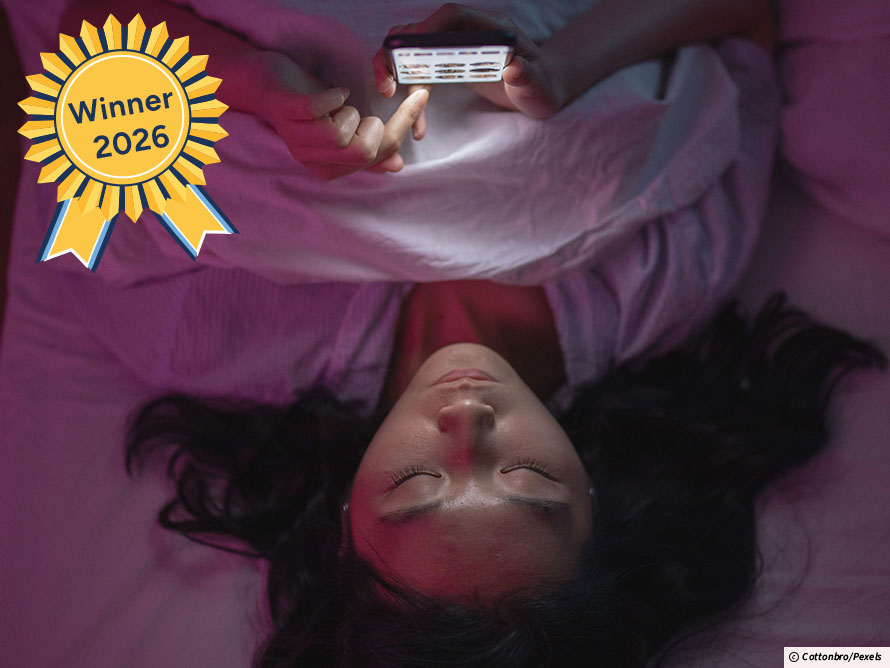
As exciting as it might seem, constantly scrolling on our phones can cause a host of physical and emotional problems, warns Lara Awe, 13, from Derby High School.
You pick up your phone to search something for your homework. A notification pops up, then a video, then another. Minutes pass like seconds, as scrolling replaces concentration, until your focus is lost and the original task is forgotten.
Nobody plans to spend hours on their phone; it happens quietly, one swipe at a time.
This phenomenon is called “doomscrolling”, and it is defined as “the action of continually scrolling through and reading depressing or worrying content on a social media or news site”.1
Doomscrolling has become increasingly worrying in recent years. A survey found that 64% of Americans describe themselves as doomscrollers; 43% report doing it daily, and 26% do so multiple times per day.2
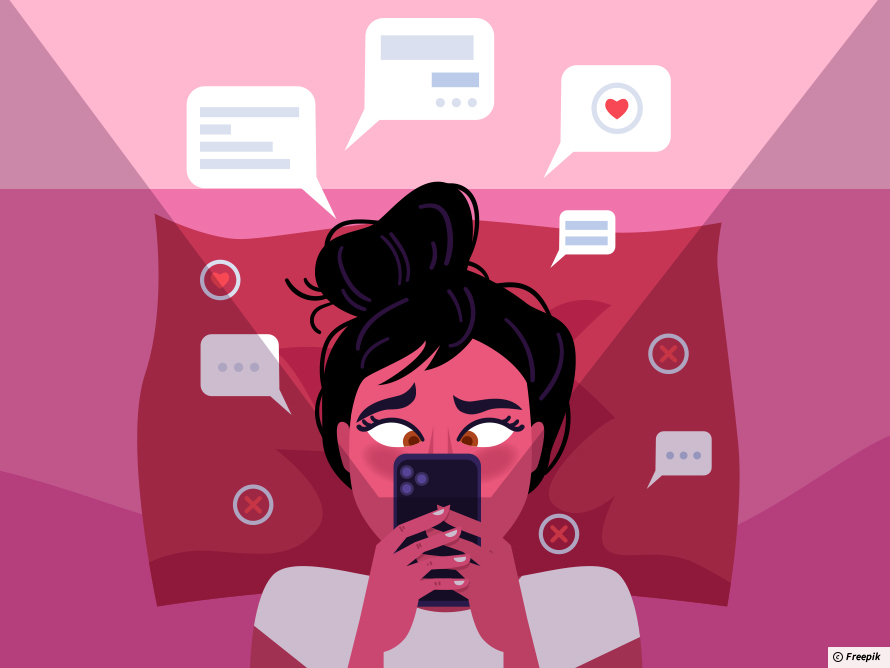
The habit has been linked to physical health problems such as headaches, muscle tension, neck and shoulder pain, elevated blood pressure, and difficulty sleeping, as well as mental health effects including heightened anxiety and feelings of dread.3
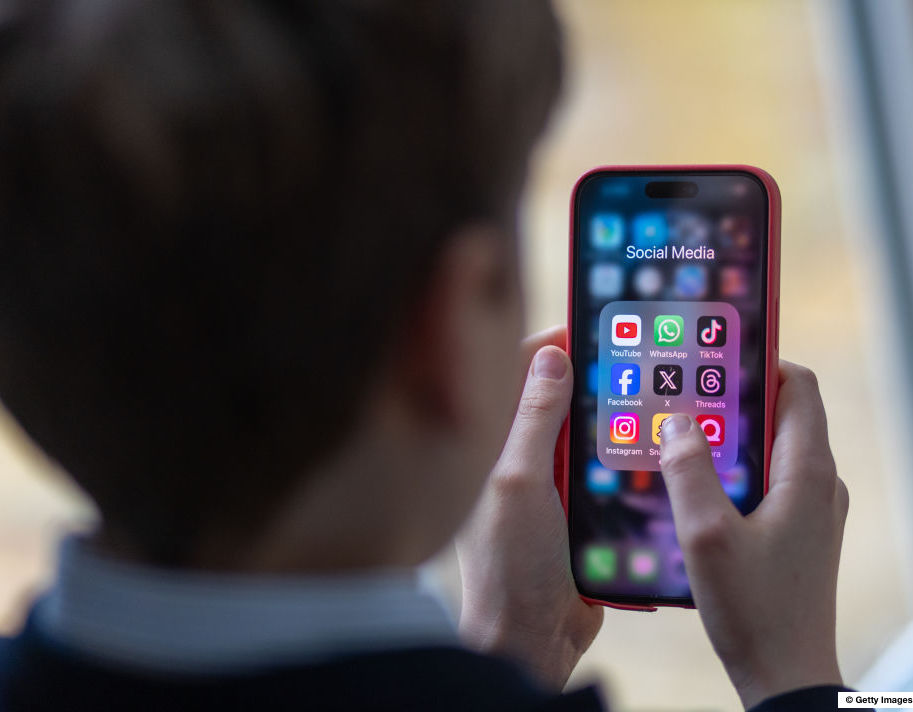
Young people are particularly vulnerable. Many social media platforms are designed to maximise engagement, using algorithms that prioritise emotionally charged and attention-grabbing content.4
Studies show that teenagers spend several hours a day online, increasing their exposure to short, stimulating content that can fragment attention and make sustained focus more difficult.5
Because young users spend time online for socialising, entertainment, and education, they are repeatedly exposed to this content, which can gradually train the brain to expect constant stimulation.6
The effects of doomscrolling are increasingly visible in education. Many young people report finding it harder to focus on homework, revision, or reading for extended periods of time.7
Tasks that once required sustained attention now compete with the constant pull of notifications and short-form content. Teachers and researchers note that this shift can lead to reduced concentration, increased distraction and a reliance on quick stimulation rather than deep thinking.8
However, it would be overly simplistic to blame social media entirely. Platforms also provide opportunities for learning, creativity, and social connection.9 For many young people, social media offers access to information and communities they might not otherwise have.
The problem lies not in the technology itself, but in the way it is designed and used.10
Doomscrolling may feel harmless at first, but its cumulative impact on attention and wellbeing is clear. As young people grow up in a world of endless content, learning to manage focus and digital habits could become one of the most important skills of a generation. Awareness is the first step – before we regain
control, attention will continue to slip away, one swipe at a time.11
Interested in submitting your own Student Voices article or video? Find out more here.

-
- 5 Ways Doomscrolling Harms Your Mental Health And Career Potential
- Doomscrolling Dangers — Harvard Health Publishing
- Doomscrolling: Tips for Healthier News Consumption
- Doomscrolling and Social Media in Adolescents
- Kids’ Social Media Use and Attention Span
- How Digital Habits Affect Focus and Attention
- Teens, Social Media and Technology
- Teachers Report Declining Attention Spans in Classrooms
- Teens and Online Communities
- How Social Media Platforms Are Designed to Be Addictive



Derby high school - 8.3
I think this is an awesome article and well done for winning as I this it’s very good to learn about the affects of this.
Anon
Doomscrolling is shocking in the society we live in today. We must put an end to it but social media should never be banned so maybe we shouldn’t put an end to it. Because it’s a very important factor in the daily life, people need communication whether that is with family of friends, place of work. Some people need to promote their business too.