The publicity surrounding the women’s game may be unrecognisable compared to just five years ago. But that does not mean the battle is won, argues Isabella Millar, 15, from Croxley Danes School.
Women’s football may be breaking records, but true equality in the game is far from being achieved.
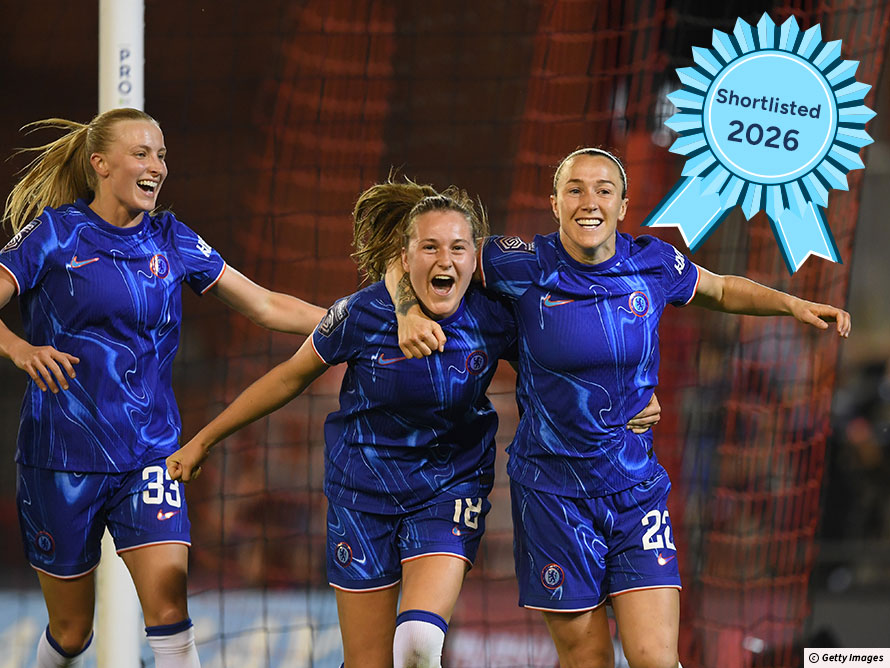
According to the Football Association (FA), attendances in the Barclays Women’s Super League (WSL) are up 239% since 2021. It has also become the most socially followed women’s league in the world (The FA, 27 September 2024). Bigger crowds, more media coverage and major clubs like Chelsea FC Women moving all their WSL games to Stamford Bridge in 2026 show just how far the sport has come (Chelsea FCW, 22 April 2026). But, if the women’s game is serious about growth, it cannot just focus on players. It also needs more female referees and coaches.
Chelsea Women’s “Never Done” perfectly captures exactly where women’s football is today, ambitious, evolving and unfinished. Progress depends on increasing female referees and coaches, ensuring women are visible as leaders and role models, not just players. If girls only see men in key roles, football’s message is incomplete.
At the moment, there is still a gap. Female under-representation in non-playing roles in football is prevalent, with the FA revealing as of August 2023, that women make up only 8% of referees operating in men’s football, and just 2.5% of officials working in the professional game (FA, August 2023). Some people argue that simply it should be “the best person for the job”, regardless of gender. However, this overlooks opportunities, mentoring and visibility and the fact that, historically, this has been neglected and unequal. Equality is not just about opening the door; it is about making sure people can get through it. Simply, talent cannot flourish without wider access to all.
As a 15-year-old Academy Player, FA Referee and Junior Coach I am fortunate to have spent the last seven years in the Academy environment and accessing many opportunities. Five factors have enabled me to have the confidence and ability to successfully hold all three roles:
1) Knowledge – knowing and understanding all pathways available to me and, more importantly, how to access them.
2) Network – family, friends, coaches, teachers and mentors who encourage me to seek out opportunities to develop myself and strive for success.
3) Role models – seeing strong females in leadership roles who make a difference.
4) Environment – a safe and supportive home, school and Academy environment, all of which encourage growth and being comfortable with the uncomfortable.
5) Resources – access to funding for course fees and equipment to support training and development.
Clearer pathways, better mentoring, safer environments and access to resources and opportunities are not special treatment; they are the basic conditions needed for talent to thrive. The success of women’s football should not only be measured by packed stadiums, but by those who feel empowered to lead the game. Until then, football is still, “Never Done”.
Interested in submitting your own Student Voices article or video? Find out more here.

Reference: How Many Countries in The World Have Free Healthcare in 2025?