
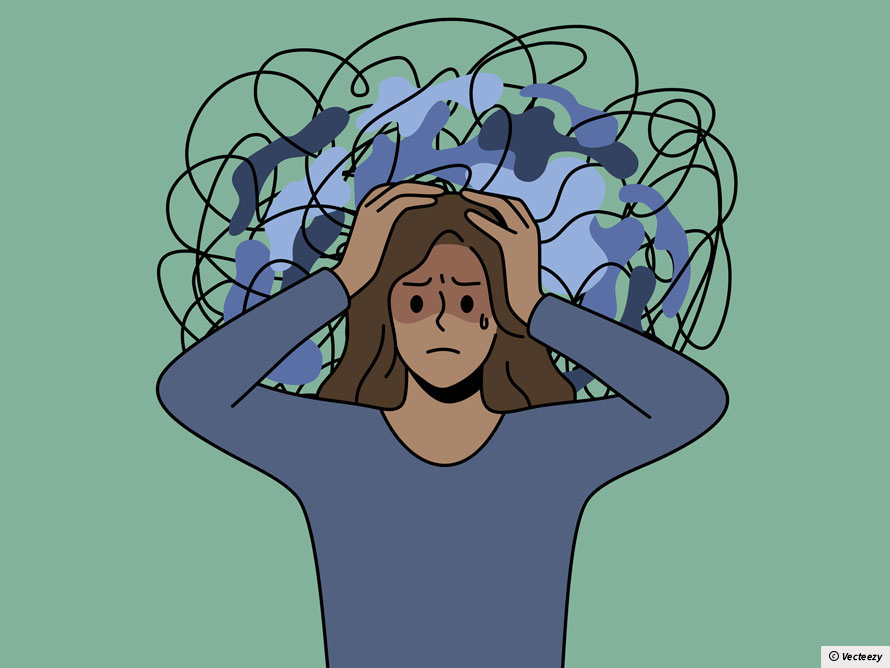
In a world obsessed by grades and leaderboards, perfectionism can be a curse, argues Sofia Tebbutt-Hall, 17, from Beauchamp City Sixth Form.
I’ve been told my whole life my perfectionism is a blessing, a characteristic anyone would be desperate to possess. Yet I’ve never felt grateful for it and instead I would be inclined to say it has been hindering my academic journey for my whole life.
From a young age, students are conditioned to think they are either inherently ‘good or bad’ at a subject. Whether that’s taking a test to see your reading level at the age of eight, racing to get top scores on Times Table Rock stars or getting back your GCSE results.
Education, whether teachers want it to be or not, is a silent competition. And when a competitive child learns that too early it leads to someone being like me. A perfectionist. Because what do my three examples have in common? An opportunity for comparison. A place where you can be the best at something. For children of divorce or difficult home lives this becomes the focus of their lives. Academics serve as an obsessive ritual they must complete to become perfect and be that ‘angel’ their parents want them to be at home. Using academics as a drive to do something good and be the best.
Move on to secondary school, and with the nature of GCSEs, perfectionism becomes a mindset of limbo. Perfectionist students now fall into two categories: the success stories and the burnouts. Burnout is a topic teachers have an obligation to become more aware about in order for their students to reach their potential.
Traditionally, we know burnout occurs in those with high-stress jobs, university students and parents. But I’m under the belief that this occurs more often than adults believe in under-18s. Burning out in post 16 education is an unfortunate event more fall into every year. Learning how to recognise and act on this is crucial for the student and the teacher going through their personal academic journeys.
So, I ask the reader: Are you really aware of what burnout in adolescence looks like? For teenagers with neurodivergence and mental health difficulties, perfectionism and academics are their safety blanket. It covers up the ugliness of the outside world and becomes their everything. But this isn’t and can’t be long-term.
Academics can’t become a child’s personality for the duration of pre-adulthood years as this leaves nothing for character building and friendship making.
The consequences of perfectionist burnout are serious and real. It can lead to a domino effect of physical health problems due to chronic stress of unhealthy coping mechanisms, a decrease in academic results and most importantly the decline of the teenager’s mental health.
These can follow teenagers into adulthood, increasing the possibility of future burnout which can be even more consequential. Therefore, we must present it as a REAL and long-term issue that must be solved.
Teachers need to learn how to help students recover from burnout: how to remind them to take rests, to set clear boundaries between school and home, to reassure them and help them to reevaluate their goals.
Finally, to quote Taylor Swift, tell the perfectionism: “This is me trying.” Often, all the teenager wants is that little child in them to be recognised and praised.
Interested in submitting your own Student Voices article or video? Find out more here.



Oporto British School - 6L
Tests make us feel stressed because we really care about getting high grades for the future.
We think a lot about how our grades will help us to get into college and meet parents’ standards – making our parents happy is important to us.
Doing lots of homework makes us feel really tired.
Farnborough hill - 7A
I like this article, it is good to help with people’s mental health and to know to not stress a lot and that you can always be seen.
ISCT - 7DL
Competition can be good because it helps students work hard and reach their goals, but it can also cause stress and make some students feel bad. Schools should help students and make learning fun for everyone.