Are we all better than elected MPs? Politics is in crisis and faith in politicians is plunging. One political scientist thinks we could do a better job of it ourselves.
Replace politicians with real people!
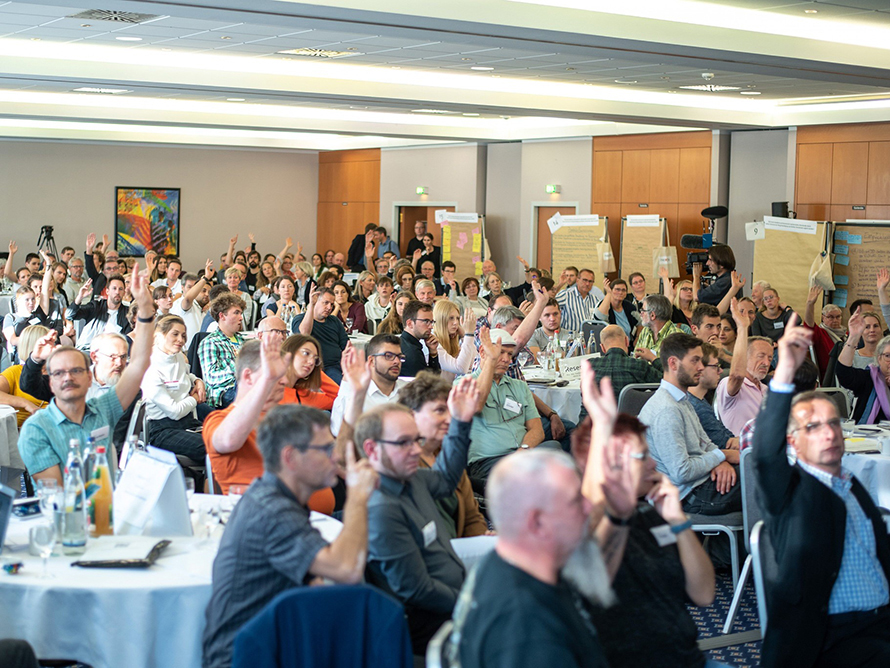 People power: A group of ordinary people in Germany meet to discuss new laws and solve local problems together through a citizens' assembly.
 Glossary
Roiled - Disturbed, as a liquid that contains a sediment would be when stirred.
Cleric - A priest or a religious leader, such as a vicar, imam, or rabbi.
Absolute monarchy - A monarchy in which the king or queen rules the country by themselves.
Legislators - People who are members of a group that has the power to make or change laws for a country or state.
Yale University - A very famous and old university in the United States, known for being one of the best in the world.
Referendums - Direct votes by the population of a country on a particular law or issue.
Lobbying - Trying to influence the decisions of the government. A lot of lobbying is legal and carried out by reputable organisations, but sometimes it can be illegal or unethical, especially when a politician uses their connections to benefit a company or organisation they belong to.
Citizens’ Assemblies - Groups of ordinary people chosen at random to learn about a specific issue, discuss it, and suggest solutions to the government.
Antidote - A cure for something. It originally meant a medicine against poison.
Polarisation - When people tend to flock towards extreme opposite points of view. Some think that polarisation is bad for politics, because it makes co-operation between people on opposing sides of a debate less likely. Others welcome it, however, because it offers voters clear alternatives in elections.
Partisan - Biased. In military terms, a partisan is a guerrilla fighter.
Sceptical - To have doubts or reservations. The philosophical theory of scepticism holds that some knowledge is impossible.
Naïve - Showing lack of experience or knowledge.