
Was Egypt the greatest civilisation in history? Historians around the world are celebrating after the discovery of a pharaoh's lost resting place.
Lost pharaoh’s tomb is a ‘lottery win’
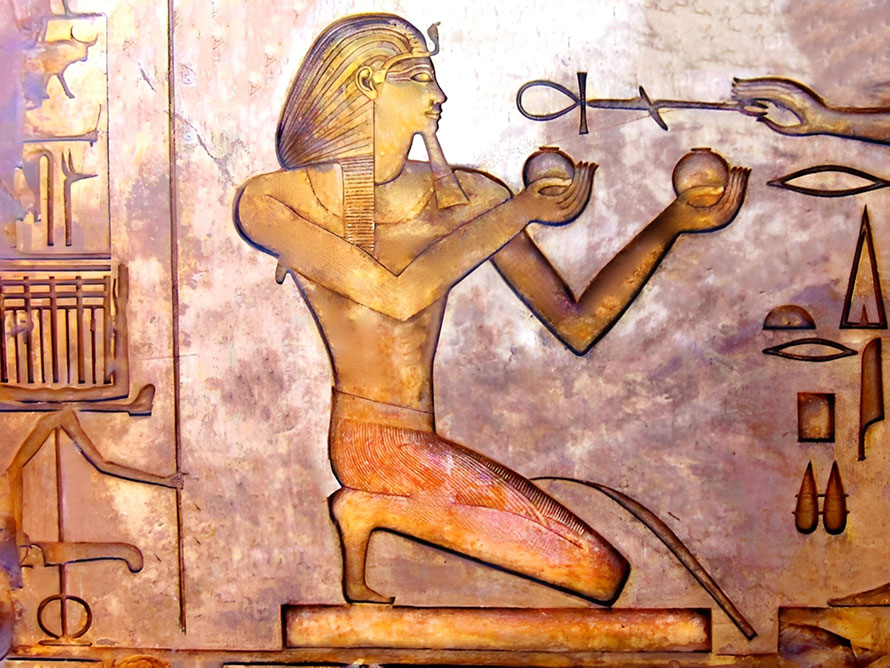 Thutmose II: When archaeologist Piers Litherland, who works alongside a British and Egyptian team, discovered the tomb of Thutmose II (pictured above) he burst into tears.
 Glossary
Tomb - A vault, usually underground, for burying the dead.
Pharaoh - An Ancient Egyptian ruler.
Archaeologist - A person who studies history through the excavation of sites and artefacts.
Ancient Egypt - One of the most powerful civilisations in the world's history, lasting for more than 3000 years between 3150BC and 30BC.
Hatshepsut - Known for gaining huge power as a female pharaoh of Egypt. She was the daughter of Thutmose I and married her half-brother Thutmose II.
Tutankhamun - An ancient Egyptian pharaoh who ruled from 1332 to 1323BC. He ascended to the throne aged roughly nine and became famous in modern times due to the discovery of his tomb in 1922.
World War Two - A global war that lasted from 1939 to 1945 and included all of the great powers.
Pyramids - The Great Pyramid of Giza, constructed between 2580BC-2560BC is the only one of the Seven Wonders of the ancient World still standing and, at 146.5 metres, was the tallest man-made structure for over 3,800 years.
Ancient - Very old.