Is FIFA fit for purpose? Accusations of political interference and biased refereeing have united football fans in anger. Some think the organisation has lost sight of its purpose.
Football fans cry ‘foul’ at World Cup
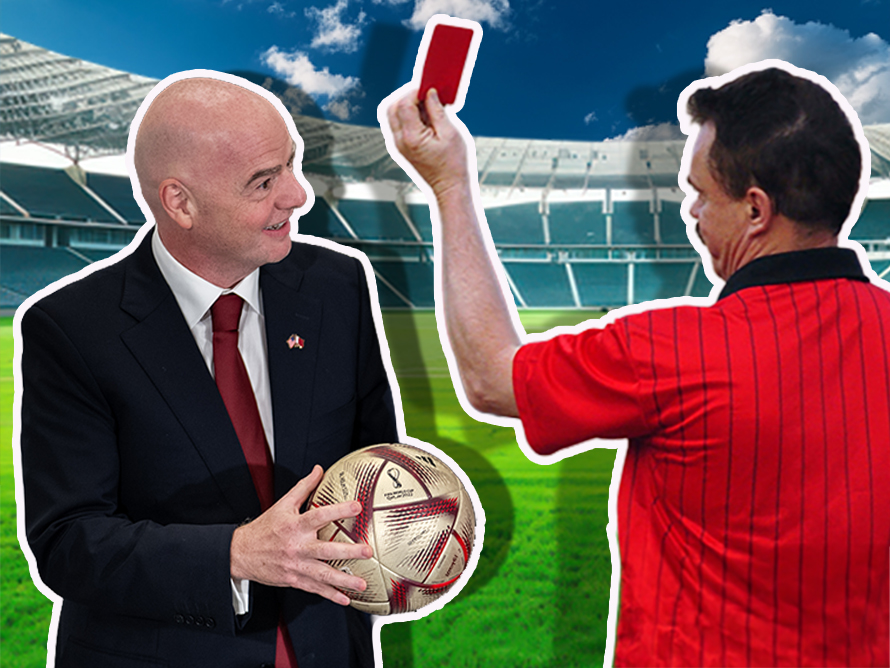 Pitch politics: FIFA President Gianni Infantino faces intense global backlash after allegedly letting politics interfere with official World Cup rules.
 Glossary
Neutral - Not supporting either side of an issue.
Uefa - The Union of European Football Associations is the organisation that administers football tournaments in Europe.
Bias - Biases are beliefs that systematically and unfairly distort a person's decisions, in favour or against one group or another.
Kickbacks - Illegal secret payments made to someone in exchange for help or unfair favours.
Wire fraud - A crime where someone uses technology, like phones, emails, or the internet, to trick people out of their money.
Money laundering - Making money acquired illegally seem to have come from a legitimate source, often by feeding it into the income stream of a legitimate organisation.
Crimea - A peninsula in southern Ukraine that was seized by Russian forces in 2014 and annexed to the larger country.
Sovereign wealth fund - An investment fund that operates on behalf of the state. PIF is chaired by Crown Prince Mohammed bin Salman, who is believed to have ordered the murder of the journalist Jamal Khashoggi.
Corrosive - Capable of destroying or eating away at something. Usually used to describe certain acids.
Corruption - When someone abuses their power for personal gain. It often involves bribery.