
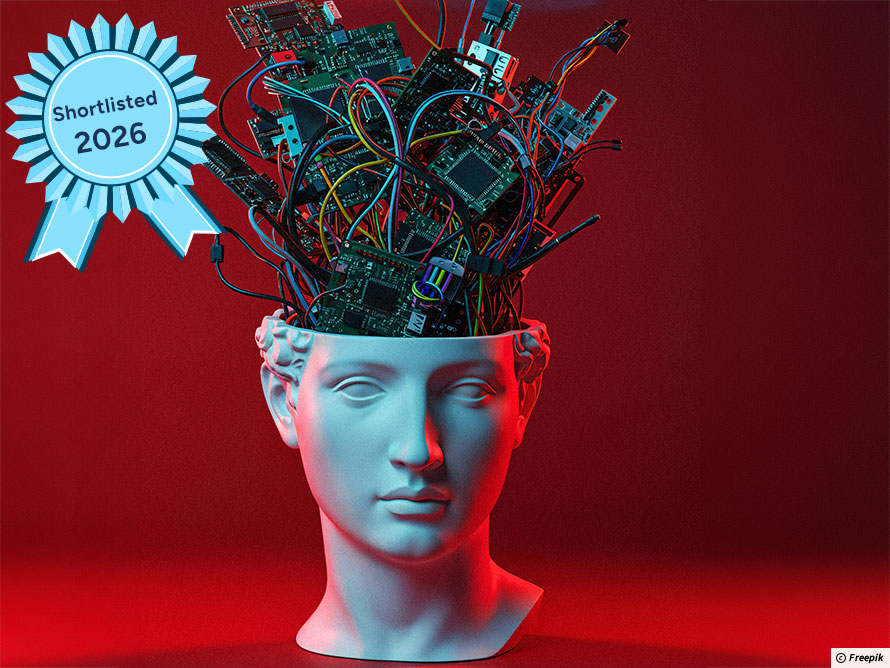
We are all keen to embrace the convenience offered by technology, but we should also be aware of the impact it can have on our brains and intellect, says Arush Valand, 15, from Queen Elizabeth’s School.
A teenager today can answer homework questions without fully understanding them. They can easily navigate a foreign city they have never been to before and even order takeaway to their home without speaking to anyone.
This is not an accident. Modern engineering has spent decades streamlining our lives, making them easier, faster and more convenient. But what if this convenience comes at a cost?
Today’s technology is designed to minimise effort and improve efficiency. GPS systems tell us precisely where to go and how to get there in the shortest time. TikTok’s algorithm decides what we watch before we can choose for ourselves. Autocorrect fixes our spelling mistakes and increasingly, artificial intelligence can write essays for us, generate revision notes and summarise articles in just a few seconds.
These inventions are not inherently bad – many are incredibly useful. AI can help students learn more effectively. Food delivery apps, self-checkouts and online banking have made everyday tasks frictionless for millions. Navigation apps save our time and reduce stress. Few people would actually want to return to paper maps.
However, technology is no longer just helping us to complete tasks: it is also changing how we
behave.
According to the journal Scientific American (2021), an over-reliance on GPS can inhibit brain
development – specifically development of the hippocampus – because we stop mentally mapping our routes ourselves.
The use of AI in schools has risen rapidly, with 54% of students aged 13 to 17 now using AI to complete homework, according to The New York Times (2026).
Engineering has not led to physical idleness but rather mental passivity.
As humans, we have evolved to develop soft skills such as resilience and problem-solving through effort and failure. If engineering constantly removes friction from daily life, these skills will weaken.
Of course, this is not the first time changing technology has scared us. Philosopher Socrates thought that writing down ideas on paper would harm human memory. Yet, modern engineering feels different – it is no longer replacing physical labour – it is beginning to replace human thinking.
Engineering has constantly aimed to improve life; the proof of its success is all around us – a
pocket-sized computer that can connect you with the rest of the world in an instant would have
seemed like magic far less than a century ago.
Now perhaps the real challenge for future engineers is not only designing technology that does more for us, rather making technology that still leaves room for humans to think for themselves. The real danger of engineering is not that robots will start thinking like humans, but that humans may slowly stop thinking for themselves.
Interested in submitting your own Student Voices article or video? Find out more here.

References:
Gonzalez-Franco, M., Clemenson, G. and Miller, A. (2021) “How GPS Weakens Memory—and
What We Can Do about It”, Scientific American, 7 May.
Singer, N. (2026) “More Than Half of Teens Use Chatbots for Schoolwork, Survey Finds”, The
New York Times, 24 February.