Grown ups should stop pretending that children do not notice the world’s problems and start talking about how much these big issues really affect them, says Shanaya, 13, from Adani International School.
Children are too often thought of as delicate, sheltered beings meant to be kept safe from the harsher edges of the world.
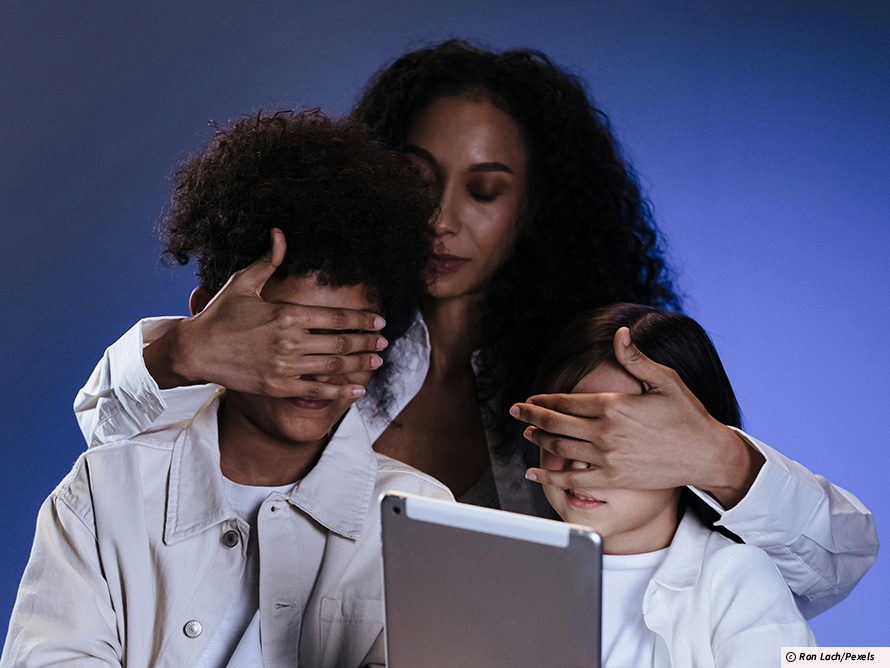
There is an invisible pact between adults, that children are meant to be in a safe space where global or national crises cannot reach them. While this image is comforting, it is also misleading. Children are, and always have been, far from isolated when it comes to reality. More often than not, children are more acutely aware of reality, especially through the reactions of the adults around them.
Long before they understand the language of policy or economics, children learn to read silence, tone and emotions. A tense dinner table after troubling news, hushed conversations about financial uncertainty in the family, or visible anxiety on a parent’s face during times of political unrest; this never goes unnoticed.
Psychologists have noticed that kids are like little mirrors for their parents’ stress. When the adults they love feel scared or worried, those heavy feelings tend to rub off on the rest of the house. You could call it “psychological participation”– the way chidlren first understand the world through feelings rather than facts. It is a bit like emotional contagion: even if no one says a word, children can still “catch” the anxiety in the air.
Research in developmental psychology shows that even without explicit explanations, children are able to form impression about safety, trust and stability based on how adults around them respond to crises.
Yet, this process is rarely acknowledged or taken into account. The irony is that the assumption that children are way too young and fragile to understand things can make their experiences more isolating. When their reactions are overlooked, there is little to no space for them to process what they are already sensing.
For example, the loss of a parent or a financial disruption in the family profoundly shapes a child’s psychological framework. No one would argue that such an event leaves a child untouched simply because they are too young to process it. Any big or small change in their immediate environment can alter their sense of security and identity as they grow older.
If such deeply personal events can have lasting effects, it is difficult to argue that the same is not the case when it comes to global or national crises that might visibly impact their parents. When a parent loses a job due to economic crisis, the child is indirectly experiencing those events as well. The impact may differ, however, the emotional and psychological cost remains real.
Studies also show that children begin forming social and political awareness at a young age. Their perspective is shaped by surroundings and conversations they encounter on a daily basis. This awareness does not simply emerge when they go to college or turn 18. It develops gradually and is largely influenced by daily experiences.
To treat children as fragile and unaware beings is to underestimate their emotional quotient. Children are more responsive and deeply connected to their environments. Global events do not wait for a child to turn 18 to begin shaping their life. It happens much earlier and in the very moments at home or outside when a child watches, listens and feels.
Interested in submitting your own Student Voices article or video and automatically entering our Student Young Journalist of the Year Awards? Find out more here.