Vaccine misinformation is more dangerous than people realise, says Muhammad Badat, from Beauchamp City Sixth Form
You’ve seen the the social media posts: “Vaccines are a calculated bioweapon employed by governments to control humanity!”
Of course they are not: vaccines remain among medicine’s greatest discoveries. In fact, global immunisation efforts are estimated to have saved at least 154 million lives over the past 50 years, equivalent to six lives saved every minute. This is according to a major World Health Organization (WHO)-led study published in the medical journal The Lancet.
Yet decades of global research and public health progress are being undermined due to several factors, among them vaccine misconceptions and misinformed conspiracy theories.
The United Kingdom was declared measles-free in 2017, yet according to the WHO’s Regional Verification Commission for Measles and Rubella Elimination, the country had lost its elimination status after outbreaks in 2024. How could a disease we thought we had eliminated return, and how are vaccine conspiracies fuelling the resurgence of measles and other potentially dangerous diseases?
Since the COVID-19 pandemic, misleading claims have spread quickly via social media platforms, word of mouth and even thanks to ill-informed politicians and celebrities eroding public trust in vaccines.
Emotionally charged but inaccurate posts travel farther and faster than well-sourced, evidence-based reporting and, according to research published in Nature Human Behaviour (2021) and Scientific Reports (2022), exposure to online misinformation increases “vaccine hesitancy” – the reluctance or refusal to vaccinate despite the availability of vaccines – reducing people’s intent to vaccinate.
A second factor behind vaccine misconceptions is the misunderstanding of the science behind vaccines.
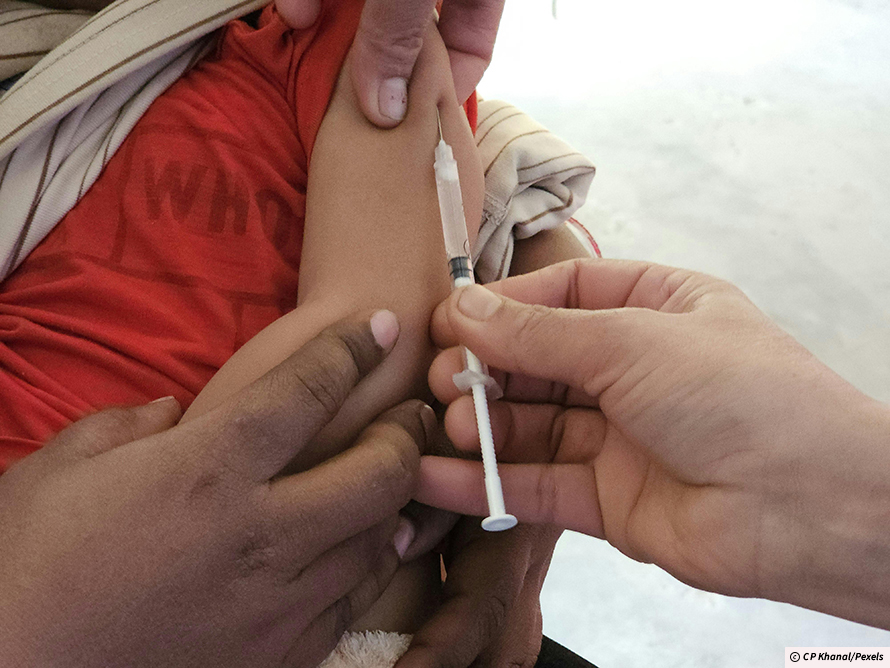
Vaccines train your immune system, not your mind. They build antibodies, not population control. They contain weakened or inactive forms of the virus, pieces of protein from the virus or mRNA (short-lived instructions to produce a harmless piece of the virus) in sterile water, and not microchips. These stimulate an immune response, forming antibodies and memory cells so that when real exposure occurs, the body can mount a rapid and effective defence.
As captivating as they sound, there are no secret added ingredients. Independent testing plays a massive part in the vetting and rolling out of vaccines. For example, claims were made that the COVID-19 vaccine contained “excessive DNA impurities”, but no such additional DNA was ever found, according to an independent analysis by the Slovak Academy of Sciences, published in npj Vaccines (2025).
Not every concern about vaccines comes from conspiracy theories. Some are understandable. For example, concerns were raised about the speed at which the COVID-19 vaccine was developed. This was possible because scientists drew on decades of prior research into mRNA vaccine technology and related coronaviruses such as SARS-CoV.
So no, COVID-19 was not a preplanned government trial to control humanity. Phew!
The real challenge today is not the science, but educating people adequately and encouraging them to get their information from verified sources.
Interested in submitting your own Student Voices article or video and automatically entering our Student Young Journalist of the Year Awards? Find out more here.
