Fatima Ismail, 14, from Sharples High School, fears that we might be on the verge of losing our creativity to AI, and explains why we should not allow this to happen.
Imagine spending days, maybe even weeks on a project that you had entirely done by yourself — only to be brutally outshone by somebody who has used Artificial Intelligence (AI).
This is what could become the unfair reality of many people, particularly younger people, if there is more reliance on the use of AI, and less on people utilising their own imagination.
Recently, people have fallen victim to the deception of a great deal of AI-generated images and videos on social media. Some may think that it is easy to distinguish between what is AI and what is real, but often find AI generated images look just as — if not even more — realistic than real human-made images.
While some may argue that AI art is not a particularly important issue, the fact that more and more people are relying on it is worrying. For example, art, videos and other forms of media can now be easily created by merely typing a few words into an online bot.
Only recently, we witnessed a dispute over speculation that an artist had used AI in their painting of a mural in London1. As a result of this incident, the mural is to be torn down.
The fact that some people may struggle to differentiate between what is real or not can only be described as worrying, especially given the fast-growing number of people around the world who are starting to use the internet and social media.
Some estimates put this figure at 1.8% over the past 12 months, and while this may not seem much, it means that approximately 66% of the world’s population now has access to the internet2 — which I find staggering.
I would argue though that art created by humans, including text, has a deeper meaning, beneath the surface, than anything AI generated. AI cannot replicate the emotion and messages concealed within the visible lines of human creativity.
As AI lacks emotion and experiences, and simply generates “art” as prompted by its user, the product is invariably soulless and inauthentic. Human-made art requires a person’s own ideas and thoughts to be expressed, which AI is unable to do.
Nevertheless, being a computer system created by humans, AI is trained extensively on art that has been created by human artists, which has taken time, effort and creativity.
In the near future then we look set to be at a great risk of job losses in the creative fields, areas like design, decorating and even writing.
These professions are a prominent aspect of our daily lives, as we see the things they produce every single day — even though we may not realise it.
How would we feel if people gave up on expressing themselves through creativity, especially if they are constantly put up against work generated by a computer system?
While AI is becoming almost unavoidable in daily life, it is still possible that we humans could choose to be less reliant upon it and to keep using our own imagination and knowledge. It is vital that we remember the skills that humans have, as well as our sense of authenticity.
Footnotes:
Interested in submitting your own Student Voices article or video? Find out more here.


Oporto British School - 10B
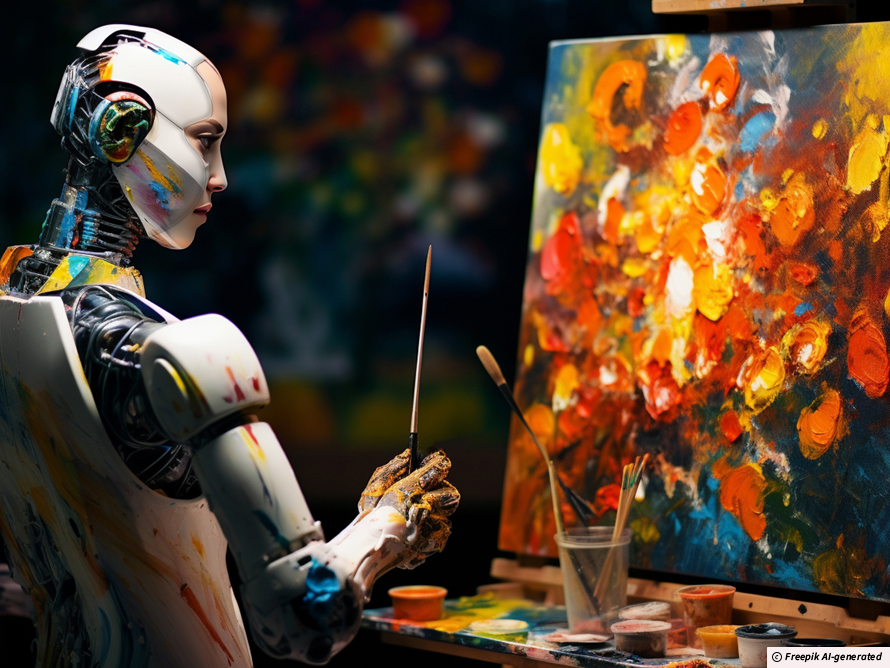
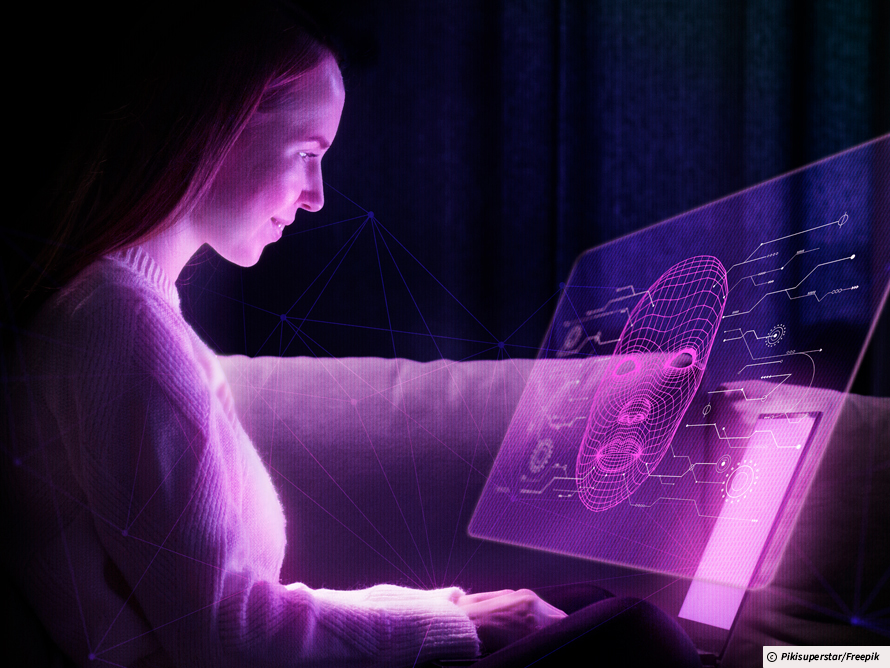
We find it ironic that the image in this article was generated using AI!