
Have we learnt our lessons from Covid-19? A deadly disease has killed 131 people in central Africa. Scientists say this is not a new pandemic. But should we still be worried?
First hantavirus! Now an Ebola scare too
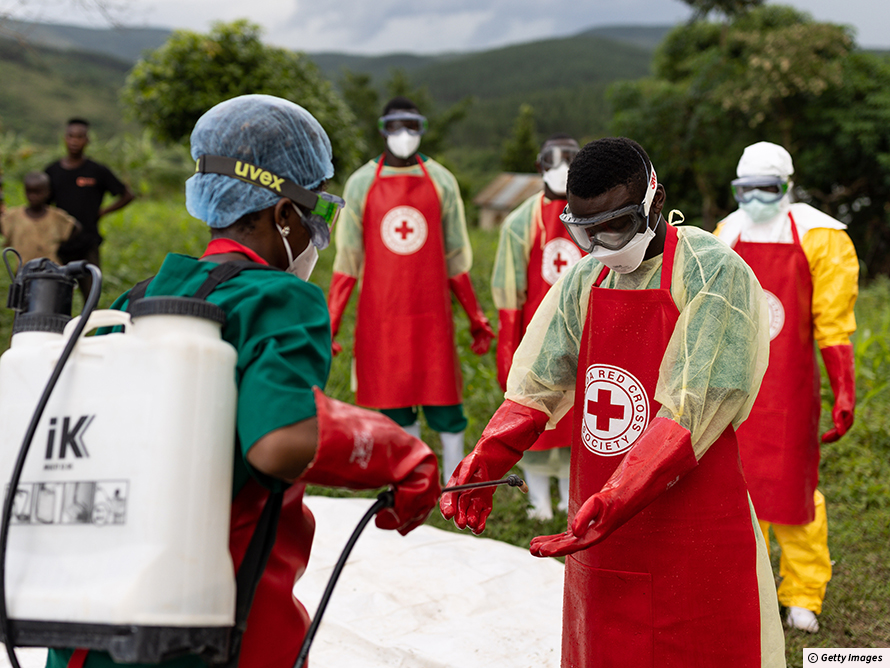 Keeping safe: Healthcare and burial workers wear protective gear to avoid the disease during a 2022 Ebola outbreak in Uganda.
 Glossary
Hantavirus - A deadly virus passed from rats and mice to humans through infected faeces, urine, or saliva. Symptoms include coughing, shortness of breath, fever, and vomiting.
Ebola - A group of deadly diseases, found mostly in parts of Africa.
Pandemic - An outbreak of disease which occurs across a wide geographic area, as opposed to an epidemic, which is confined to a particular region.
Democratic Republic of Congo - A country in central Africa with a population of 99 million.
Meningitis - A dangerous disease that causes inflammation of the membranes protecting the brain and spinal cord.
Bird flu - An infection that mainly affects birds but does occasionally spread to humans. Most human infections take place in Asia and North Africa.
Monkeypox - A viral disease causing a rash, fever and other symptoms. It was found mainly in central and western Africa before spreading more widely in 2022.
Trauma - A deep emotional wound from a very shocking, scary, or distressing event that overwhelms a person's ability to cope, leaving lasting negative effects on your feelings, behaviour, and well-being.
Public inquiry - An investigation set up by the government.
Treaty - A formal agreement, usually between two or more countries.
Disinformation - False information intended to mislead, including propaganda, which all too often encourages the spread of misinformation, fake news spread by mistake. It is contrasted with misinformation, which may be spread accidentally.